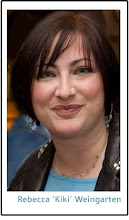
When it comes to Education I'm a bit "Back To The Future" in my philosophy. Hi-Touch and Hi-Tech. Hi-touch because there's nothing more real than children, especially young children. Hi-tech because it's the present and future.
Combine the old fangled methods that work well with technology that meets the educational, intellectual, emotional and creative needs of children. It sounds very simple, and conceptually it is but...it also implies asking and answering many questions about what the "educational, intellectual, emotional and creative needs of children" are. That is one of our goals here at Daily Life Consulting (4 Kids).
Other goals include applying all the knowledge and using it to create and develop and teach daily life solutions which will enable children to have the most fun and successful childhoods possible. We work with parents, teachers, counselors, therapists, coaches, schools and school administration, government and corporations and anyone else who works and cares about children who would like to acquire the skills, knowledge and techniques that will enable them to encourage healthy growth and success.
To that end, along with the Learning Readiness and Skills modules that I've been working on we are in the midst of creating and developing one of the most exciting coaching and learning modules that it has been my extreme joy and excitement to create. I don't want to say more until it's been worked through a bit more but it will combine the most basic elements of hi-touch with preparing children for a future in a very hi-tech world.
In answer to your questions about what I think re: the New York Times article about Single Sex Public Education. Yes.
As for what works, check out a great article in the Wall Street Journal about education that works, that is (gasp) somewhat old-fashioned What Makes Finnish Kids So Smart?Among other concepts "one explanation for the Finns success is their love of reading".
What I love about the article is the description of the Finnish philosophy, the libraries in the malls, the lack of competing "cool factors" in schools. The focus on learning and allowing for children to be children and growing. Mr. Erma, a teacher at the school put it brilliantly "we just have to accept the fact that they're kids and they're learning how to live."
Let's work together to do that ... help them "learn how to live". Not "how to take tests well" or "how to get a pedicure at 6" or "how to follow pop entertainment role models to the exclusion of everything else" or "how to be the ultimate consumer by age 10" but simply "how to live".
If you have any questions or comments or would like more information on Daily Life Coaching 4 Kids please email me at rebecca at dailylifeconsulting dot com.
Enjoy the day your way,
RK
Rebecca "Kiki" Weingarten M.Sc.Ed, MFA
Daily Life Consulting
Showing posts with label What Makes Finnish Kids So Smart?. Show all posts
Showing posts with label What Makes Finnish Kids So Smart?. Show all posts
Tuesday, March 4, 2008


Monday, March 3, 2008
Bill Gates Wants To Know... How To Make Kids Interested in Science
So Bill Gates wants to know how to get children more interested in science (he asks the question on Linked In).
Simple Bill - in three words - fun, exciting, important.
Make science fun.
Make it exciting.
Make it something that is perceived to have worth and importance in our society.
Make science mushy, gushy, messy, explosive, fun, something to think about before, during and after school. Don't fit it into a 45 minute block of time during a school day that is devoted to test-prep at the expense of everything else.
I could go on and on about it but instead I'll just remember the goofy science experiments and lessons I did with my early childhood classes. We laughed, we gasped, we thought and talked about them. We took pictures and they became "remember when?" moments. They were fun. They were exciting. They were important because I tied them into the children's worlds. They were relevant.
So Mr. Gates here's how it looks through the eyes of someone who looked at it through children's eyes for many years. Joyous, Fun, Exciting, Full of Feeling, Worthwhile.
Or, imagine what it looked like. A room full of children from all different countries around the world (our public school was called "The International School"). Some speak English, some don't. They're all huddled around a corner of the room. Some are wearing smocks, some are wearing rubber gloves. They are all smiling. Most are giggling. Some are ooo-ing and aaaaa-ing. Some are clapping their hands with glee and some are getting a bit giddy and jumping in place. Their eyes are glowing and their faces are shining. They're all smiling unless they're concentrating too hard, in which case, they are tense with anticipation.
They are inventing. They are creating. They are discovering. They are asking questions. They are uncovering answers. They are thinking new thoughts.
(Oh, and by the way - they're behaving.) They are scientists and they are loving every minute of it.
That's how you get kids interested in science Mr. Gates. Try it. You'll love every minute of it yourself.
Simple Bill - in three words - fun, exciting, important.
Make science fun.
Make it exciting.
Make it something that is perceived to have worth and importance in our society.
Make science mushy, gushy, messy, explosive, fun, something to think about before, during and after school. Don't fit it into a 45 minute block of time during a school day that is devoted to test-prep at the expense of everything else.
I could go on and on about it but instead I'll just remember the goofy science experiments and lessons I did with my early childhood classes. We laughed, we gasped, we thought and talked about them. We took pictures and they became "remember when?" moments. They were fun. They were exciting. They were important because I tied them into the children's worlds. They were relevant.
So Mr. Gates here's how it looks through the eyes of someone who looked at it through children's eyes for many years. Joyous, Fun, Exciting, Full of Feeling, Worthwhile.
Or, imagine what it looked like. A room full of children from all different countries around the world (our public school was called "The International School"). Some speak English, some don't. They're all huddled around a corner of the room. Some are wearing smocks, some are wearing rubber gloves. They are all smiling. Most are giggling. Some are ooo-ing and aaaaa-ing. Some are clapping their hands with glee and some are getting a bit giddy and jumping in place. Their eyes are glowing and their faces are shining. They're all smiling unless they're concentrating too hard, in which case, they are tense with anticipation.
They are inventing. They are creating. They are discovering. They are asking questions. They are uncovering answers. They are thinking new thoughts.
(Oh, and by the way - they're behaving.) They are scientists and they are loving every minute of it.
That's how you get kids interested in science Mr. Gates. Try it. You'll love every minute of it yourself.
Subscribe to:
Posts (Atom)